Insurance and Safety for Flat Clearance Hornsey: Insured Rubbish Company Standards
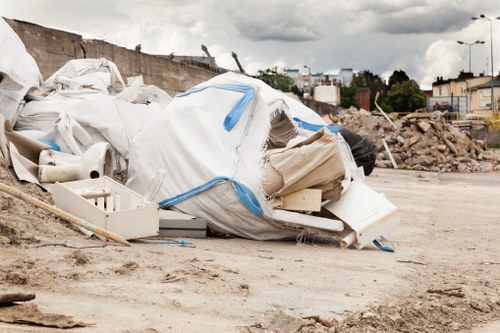 At Flat Clearance Hornsey we prioritise safety and carry the credentials of an insured rubbish company to give flat owners confidence that every clearance is professionally covered. Our statement of intent is clear: we operate as a fully insured waste removal partner for residential clearances, adhering to rigorous safety protocols while protecting clients, staff and the public. This page explains our core insurance cover, staff training, protective equipment and the risk assessment process that together define our approach to responsible, insured rubbish clearance in Hornsey.
Public liability insurance is central to being a reputable insured waste removal company. We maintain comprehensive public liability cover that protects against accidental injury to third parties or damage to third-party property arising from clearance operations. Policy limits are selected to reflect the scale of the work we carry out and regulatory expectations for domestic and communal flat clearances. Our insurance documentation is up to date, and our team ensures that cover is active for every job undertaken, providing clients with reassurance that any unforeseen incidents are handled through an established claims process.
 Verifying that you are working with an insured rubbish removal provider is straightforward: we provide proof of insurance on request and retain records for audit. When engaging an insured rubbish removal company, look for clear evidence of certificates of insurance and policy numbers linked to current dates. We also maintain supplementary protections such as employer’s liability where applicable, and we partner with disposal sites that hold appropriate permits. Transparency about insurance is part of our commitment to safe, compliant clearances in Hornsey and surrounding areas.
Staff Training and Competence
People deliver safe clearances: our team are trained to the standards expected of a professional insured rubbish company. Training topics include manual handling, safe lifting techniques, incident reporting, working at height precautions for stairwells and balconies, and awareness of hazardous materials. All operatives undergo on-the-job mentoring and periodic refresher training to maintain competency. We also ensure that staff understand relevant legislation and customer protection obligations, so they make decisions that prioritise safety and protect our insurance position.
Risk Assessment Process
 Every job begins with a documented risk assessment and, where necessary, a method statement. Our risk assessment process identifies hazards such as unstable furniture, sharps, asbestos risk indicators, restricted access, and potential damage to communal areas. For each hazard we record likelihood, potential consequence and control measures — from physical barriers to scheduling adjustments. The outcome is a site-specific plan that is shared with the crew before work commences. If risks change during a clearance, a dynamic reassessment is performed to adapt controls in real time.
PPE and appropriate equipment are specified in each assessment. This ensures that when operatives face higher-risk tasks, they are fully prepared and insured to work safely. Our approach to risk assessment supports both the protection of residents and the longevity of the insurance arrangements that an insured rubbish company must hold.
 Personal protective equipment (PPE) is standard issue for all operatives and tailored to the task at hand. Our crews wear high-visibility clothing where public access is involved, and use cut-resistant gloves, steel-toe boots, dust masks or respirators where dust or mould is present, and eye protection for demolition or heavy handling tasks. Typical PPE items include:
- Gloves — cut-resistant and disposable as required
- Protective boots — steel toe or composite safety footwear
- Masks and respirators — appropriate for dust, spores or fumes
- High-visibility clothing for communal or roadside work
- Hard hats and eye protection for identified overhead risks
 On-site safety also covers load security, correct use of trolleys and sack barrows, and safe vehicle packing to protect both public roads and disposal sites. Our drivers are instructed to comply with vehicle insurance requirements and load restraint standards so that waste reaches licensed facilities without incident. As an insured junk removal company we ensure every stage from collection to disposal is documented, with transfer notes and, where applicable, waste carrier records retained as part of our compliance framework.
Incident reporting and recordkeeping are part of what makes an insured rubbish company reliable. If an incident occurs, our team follows a defined accident management procedure: immediate first aid and securing of the area, notification of relevant parties, recording of the incident and follow-up to identify root causes. These records are used to update risk assessments, inform further training, and, if required, to support insurance claims and remedial actions. This continual improvement cycle reduces repeats and strengthens community safety.
We also emphasise environmental responsibility alongside safety and insurance. Waste streams are segregated where possible, and materials taken to licensed transfer stations and recycling facilities. Proper documentation of disposal routes reduces liability and demonstrates that our insured waste removal operations are consistent with regulatory expectations and best practice for domestic flat clearances in Hornsey.
Summary: choosing an insured rubbish company for flat clearance means choosing a partner that combines public liability cover, trained staff, correct PPE and a robust risk assessment process. At Flat Clearance Hornsey we integrate these elements to deliver safe, compliant and respectful clearances for residents and property managers alike.